My contribution journey with the Polyglots team:
1.1. Introduction
Hello everyone! I am Sergio Álvarez Casasola, and this is my final report for the WP Credits course. This report summarizes my contributions to the Polyglots team (WordPress Translation Team), the challenges I faced, and the skills I learned. I hope my experience inspires others to contribute to open source projects.
1.2. Teams and projects I participated in
Teams: Polyglots (WordPress Translation Team).
Project focus: Translating and reviewing security plugins (Loginizer, Really Simple Security) and core features (2FA, SSO, CSRF, .htaccess rules) from English to Spanish (es_ES). My goal was to improve the quality of Spanish translations, moving from automatic suggestions to manual translations.
1.3. Learning resources
Guides and tutorials I used:
- Polyglots Handbook – Official translation guide
- GlotPress platform – Main tool for translations
- GlotDict extension – Helper tool for GlotPress (keyboard shortcuts, validations)
- Nilo Vélez plugin and theme lists – Priority lists for Spanish (es_ES)
Mentorship:
I received guidance from my course mentor, Roberto. He gave me helpful feedback on my first translations. He helped me understand that automatic translations are not considered valid contributions and showed me priority resources for Spanish translations.ciones válidas y me señaló recursos prioritarios para las traducciones al español.
1.4. Challenges and solutions
| Challenge | Solution |
|---|---|
| 1. Finding untranslated strings – Most Spanish (es_ES) projects were 100% complete. | I switched to Spanish from Mexico (es_MX) and explored security plugins like Loginizer, where I found many pending strings in «Waiting» and «Changes Requested» status. |
| 2. Understanding technical security terms – Concepts like CSRF, 2FA grace period, .htaccess rules, and SSO were hard to translate without technical knowledge. | I researched each term before translating. For example, I learned what a CSRF attack is so I could explain it clearly in Spanish without being too technical. |
1.5. My contributions
Here are some of the translations I have worked on. You can see my contributions on (translate.wordpress.org) on my profile.
Screenshots of my work:
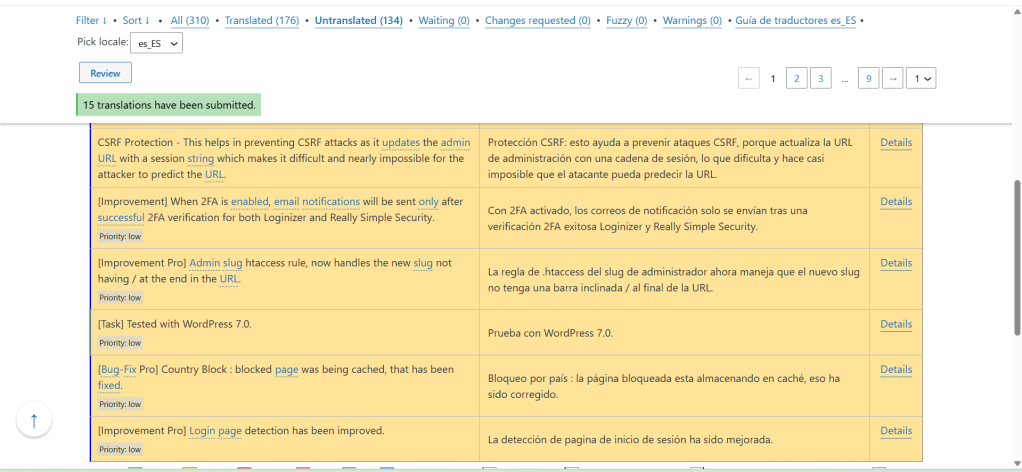
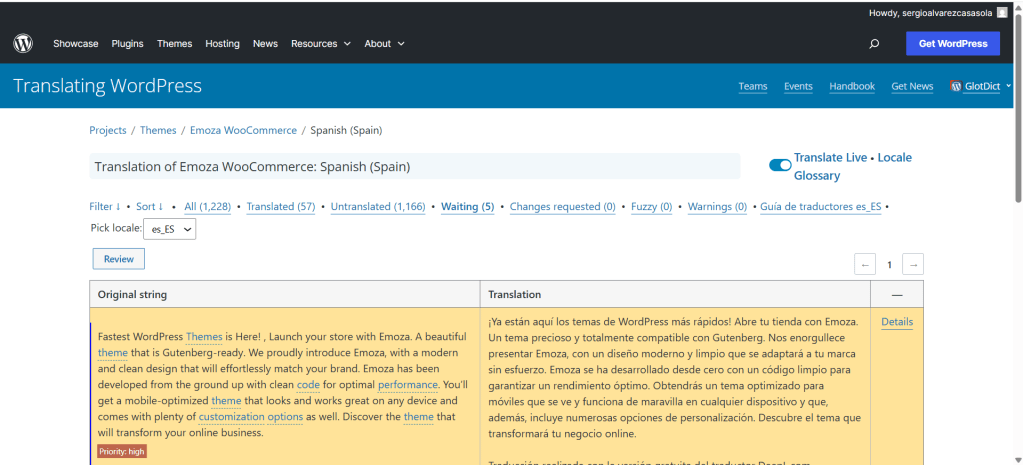
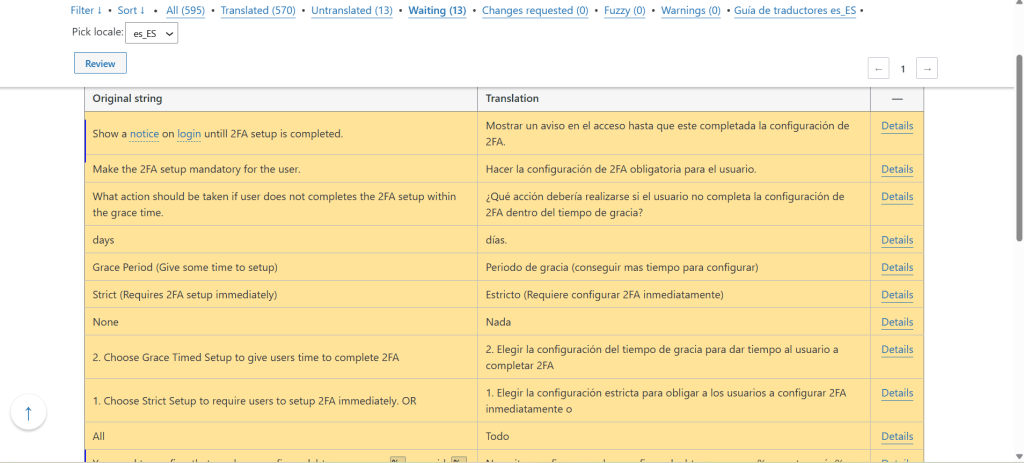
Description of the screenshot: The image shows some of my recent translations on the Loginizer plugin and other security features, including:
- Email notifications after successful 2FA verification
- .htaccess rules for custom admin slugs (handling URLs without a trailing slash)
- CSRF protection (updating the admin URL with a session string)
- Limit concurrent logins
- Passwordless social login (Key Less Social Login)
- Country blocking
1.6. Key lessons from the WP Credits course
Open source collaboration: Translation is not just about changing words. It is about understanding the context, following glossaries, and respecting community guidelines.
Quality over quantity: One well-translated string is worth more than 100 automatic translations. Validators (PTEs) appreciate manual, reviewed work.
The community is welcoming: Even when I made mistakes (using automatic translation), my mentor corrected me kindly and gave me resources to improve.
How the course helped me connect with the WordPress community:
The WP Credits course introduced me to the Polyglots team, their handbook, and the translation platform. I learned how to use translate.wordpress.org, use GlotDict, and follow the Spanish style guide. I also found community resources like Nilo Vélez’s priority lists and the Slack channels where translators coordinate.
1.7. New skills I learned
- Using the GlotPress platform, GlotDict extension (keyboard shortcuts, validations), understanding .htaccess rules, CSRF, SSO, 2FA, and security terminology.
- Researching technical concepts before translating, accepting and learning from feedback, documenting progress through blog posts.
- Translating technical English into Spanish while keeping natural language and following WordPress-specific glossaries.
1.8. Personal reflections and next steps
What I enjoyed most:
I was surprised by how welcoming the WordPress community is. Even as a beginner, my mentor took the time to correct my mistakes and guide me toward better practices. I also enjoyed the technical challenge of translating security features – it pushed me to learn what CSRF, 2FA grace periods, and .htaccess rules really are.
What surprised me:
Spanish from Spain (es_ES) is almost 100% complete! This is great for WordPress users, but it is a challenge for new translators looking for work. Switching to Spanish from Mexico (es_MX) or focusing on security plugins helped me find opportunities.
This course taught me that open source is not just about writing code, but also about translating, reviewing, and helping others. At first I was afraid of making mistakes, and I did, but my mentor helped me get better. Now I feel more confident translating technical terms and I understand better how WordPress works inside. I will definitely keep contributing after the course
 sergioalvarezcasasola
Deja un comentario